
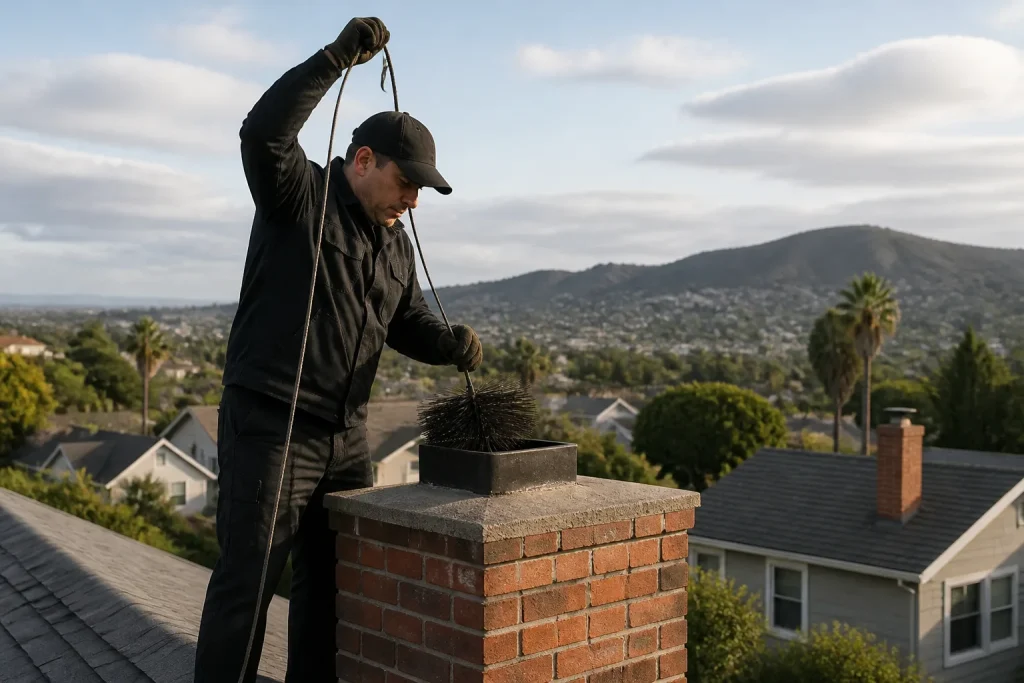
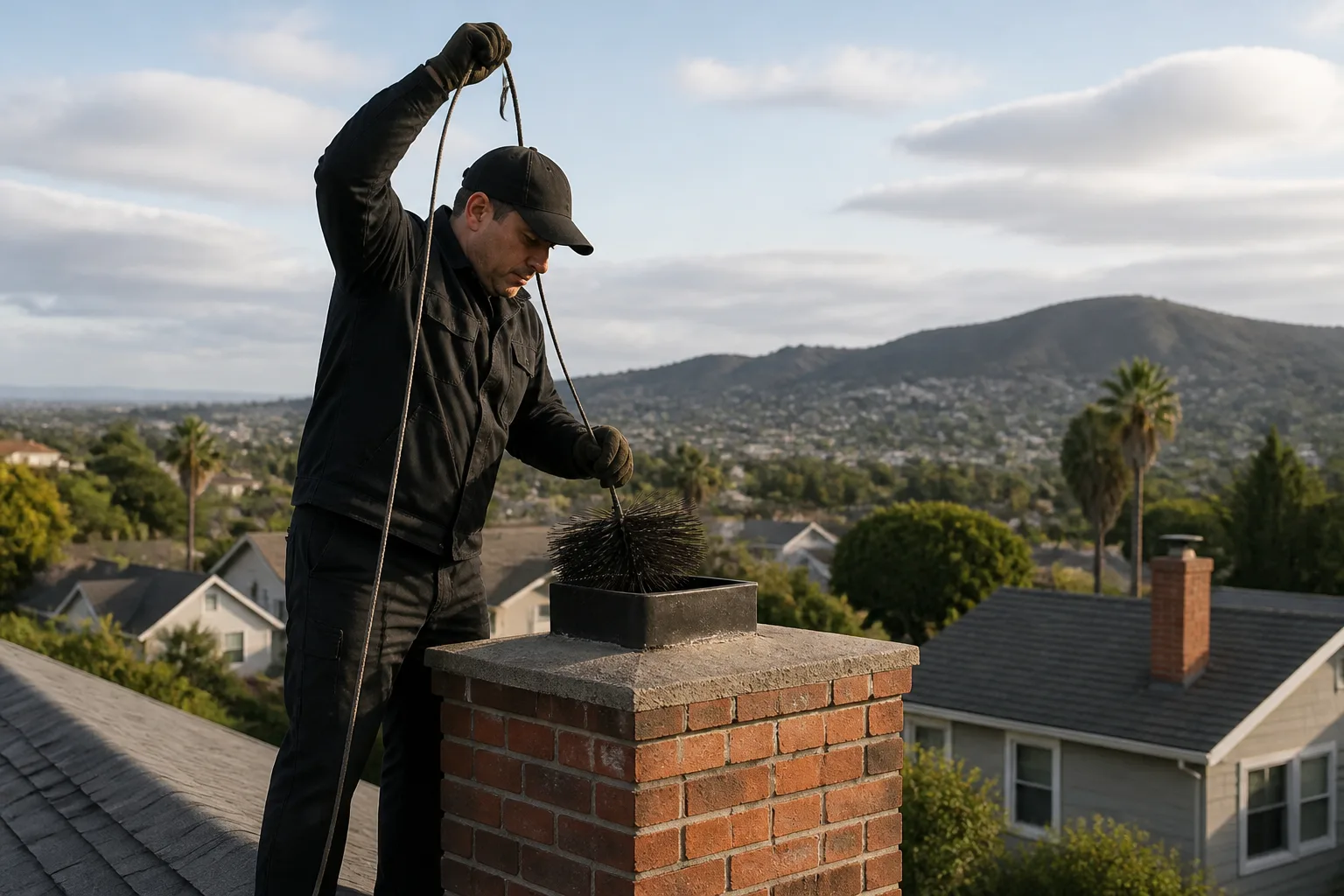
Emergency Chimney Sweep Near Me: What La Mesa Homeowners Should Do First
If you’re searching “emergency chimney sweep near me” because you just heard something strange, smelled smoke where there shouldn’t be any, or spotted a crack running up your chimney after a tremor, stop and take a breath. The first thing a La Mesa homeowner should do in any chimney emergency is not call a sweep company. It’s determine which type of emergency you’re dealing with, because a chimney fire, a sudden backdraft, and post-earthquake damage each demand a completely different first move. Get the sequence wrong and you can turn a small problem into a house fire or a carbon monoxide event. If you’d rather not sort through this alone, call (833) 593-6651 and we’ll walk you through it while a crew heads your way.
We answer 24/7. Fast dispatch from 7am to 7pm, Sunday through Friday.
Three Types of Chimney Emergencies (And Why Your First Move Differs)
La Mesa homes face three distinct chimney emergency scenarios, and they are not interchangeable. Each one has its own first response, and confusing them is where homeowners get hurt.
1. Active chimney fire. You’ll hear it before you see it. A deep, rumbling roar that sounds like a jet engine or a freight train coming from inside the chimney. Flames may shoot from the top of the flue. Thick black smoke pours out. This is a structure fire in progress. The roar is creosote, a flammable byproduct of wood burning, igniting inside your flue.
2. Sudden smoke backdraft. Smoke floods the living room when you light a fire, or on a windy evening when no fire is burning at all. The house fills with haze and that acrid smell. This is usually a draft reversal, a blockage, or a flue that can’t pull air properly.
3. Post-earthquake structural concern. A visible crack running through the chimney masonry, a shifted cap, or brick dust around the hearth after seismic activity. You may not see fire, but the chimney may no longer be safe to use, and in a serious case, it could be unstable.
Each of these is real, each warrants a fast response, and each has a different playbook. Here in La Mesa, where the Rose Canyon fault and other regional fault lines run through San Diego County, that third category is more relevant than most homeowners realize. A chimney sweep can address all three, but not always as the first call.
If You Hear That Roaring Sound: The Chimney Fire Protocol
A chimney fire is the one emergency where the order of operations matters more than anything else. Here is the exact sequence:
- Close the damper and any air inlets to the fireplace. This cuts oxygen to the fire. Opening the damper wider to “let it out” feeds the flames, and that is the worst thing you can do.
- Evacuate everyone from the house, including pets. Close doors behind you. A chimney fire can breach into the home’s structure in minutes.
- Call 911 first. Not a chimney company, not your neighbor, not your insurance agent. The fire department needs to be rolling before anything else. Tell the dispatcher: “Chimney fire, flames or roaring from the chimney, everyone is out of the house.”
- From outside, spray the roof around the chimney with a garden hose if you can do so safely without a ladder. Wetting the shingles near the flue can slow spread, but never get on the roof, and never open the firebox to spray inside.
- Do not re-enter until the fire department clears the house.
After the fire is out, that’s when the sweep comes in. A chimney fire reaching even 1,000°F inside the flue can crack clay liners, warp metal liners, and compromise mortar joints. The fireplace is not safe to use again until a certified inspection proves otherwise. If you’re in La Mesa and you’ve just had a chimney fire, call (833) 593-6651 after the fire department leaves. We’ll schedule the inspection and document everything for your insurance.
Smoke Backdraft: Less Dramatic, Still Dangerous
A sudden smoke event without flames feels less urgent than a fire, and in one sense it is. But a backdraft is often the first warning of a blockage or a flue problem that can escalate. Here’s what to do in the first twenty minutes:
- Extinguish the fire if one is burning. Close the damper only after the flames are out. If the fire is still active, closing the damper traps smoke inside and sends carbon monoxide into the room.
- Open windows and doors to ventilate. Get cross-ventilation moving. If anyone in the house feels lightheaded, nauseated, or has a headache, step outside and consider calling 911, as those are carbon monoxide symptoms.
- Do not try to “burn it off” by adding more wood or opening the damper further. A draft reversal has a cause, and burning hotter hides the cause while adding risk.
- Check the obvious: is the damper fully open? Is something blocking the flue visually from the firebox? Did a tree branch fall onto the cap? La Mesa’s Santa Ana wind events can pressurize a chimney cap and force reversal, and they’re also good at dropping eucalyptus branches exactly where you don’t want them.
If the smoke was a one-time event on a high-wind evening and everything looks clear, you might be fine to use the fireplace again. But if it happens twice, or if you smell smoke odor lingering for days, that’s not a weather fluke. It’s a flue that isn’t drafting, and it needs a camera inspection. We use professional-grade materials from Gelco and Olympia Chimney for repairs because a flue that can’t vent properly is a carbon monoxide risk, not just a nuisance.
After an Earthquake: What Does a “Chimney Check” Actually Look Like?
La Mesa sits in a seismically active region. When the ground shakes, masonry chimneys are among the most vulnerable parts of a house. They’re tall, rigid, and attached to a structure that sways. A chimney built decades ago, before modern seismic codes, can shift or crack even in a moderate event.
Here’s what to look for in the first hour after a meaningful tremor:
- New cracks in the exposed chimney above the roofline, especially horizontal cracks or stair-step cracks through the mortar joints. These indicate masonry movement.
- Brick dust or small debris around the firebox or hearth. This can mean shifting inside the flue.
- A visible lean. Stand across the street and sight along the chimney edge against the sky. If it’s not plumb, that’s serious.
- A shifted or missing chimney cap. The cap protects the flue from rain and debris, and it’s often the first thing to move.
Important: you cannot verify the flue’s condition from the ground. A chimney can look fine outside while the liner inside has separated or collapsed. That’s why a Level 2 inspection is mandatory after seismic activity, not optional. A Level 2 inspection goes beyond the routine sweep. It includes a camera scan of the entire flue interior, an assessment of the mortar joints from top to bottom, and verification that the liner is still intact and properly aligned. We perform this inspection and provide photo documentation so you can see exactly what we see. If you’re in La Mesa and felt the shake, call (833) 593-6651 to schedule a post-tremor inspection before you light the next fire.
What to Tell the Dispatcher and What to Document
When you call a chimney professional after any of these emergencies, the information you provide in the first minute determines how quickly the right crew arrives with the right equipment. Here’s what to have ready:
- What happened, in one sentence. “Roaring sound from the chimney for about five minutes, then smoke in the house” is perfect.
- When it happened. Last night, an hour ago, during the wind event. Timing matters for assessment.
- What you’ve done so far. Did you close the damper? Call 911? Ventilate the house? We need to know what state we’re walking into.
- The type of fireplace. Masonry fireplace, factory-built or prefab unit, wood stove insert? Each has different failure modes and different inspection requirements.
- Whether the fire department responded. If they did, there’s a fire report. We’ll want that report number.
For insurance purposes, document everything. Take photos of visible damage before anything is moved or cleaned. Photograph the firebox, the damper, the chimney exterior, and any smoke staining. If the fire department wrote a report, request a copy. Your insurance carrier will likely ask for it when you file a claim for damage. We can work with your insurer to provide the technical documentation and repair estimates, but the photos and fire report you collect in the first hours make the whole process smoother.
What Happens After the Emergency: The Level 2 Inspection
After any chimney fire, significant backdraft event, or post-earthquake concern, the fireplace is off-limits until a Level 2 inspection clears it. This is not a suggestion, and it’s not a sweep company trying to upsell you. A damaged flue can send heat and embers into the walls of your home. A blocked or collapsed liner can push carbon monoxide into your living space. The fireplace that worked perfectly last week can become a hazard after one event.
A Level 2 inspection is more comprehensive than the standard annual sweep. It includes:
- A full camera scan of the flue interior, from firebox to cap. We’re looking for cracks, gaps, separated mortar joints, and any portion of the liner that has shifted.
- Verification of proper clearances from combustibles. The space around the flue inside walls and attics matters enormously.
- An assessment of the crown, cap, and flashing. Water entry after chimney damage leads to rapid deterioration in masonry.
- A check of the smoke chamber and damper function. These are common failure points that only show themselves after an event.
If the camera reveals liner damage, you have options. In many cases, we can restore a damaged flue liner using HeatShield, a cerfied resurfacing method recognized by the chimney industry. That’s often possible when the underlying masonry is sound but the liner surface has cracked or spalled. For more severe damage, a new liner may be required. We work with DuraFlex flexible liner systems, which are well suited to older La Mesa chimneys with offsets or complex masonry geometry. The point is: you won’t be told you need thousands of dollars of work without seeing the camera footage that proves it.
La Mesa-Specific Risk Factors Worth Knowing
La Mesa’s climate and geography shape how chimney emergencies unfold here. Winters are mild, so chimneys don’t face the deep freeze-thaw cycles of colder regions. What they do face is seismic activity and wind. High-wind Santa Ana events blow in from the east, and they can pressurize a chimney in ways that force smoke back into the house. They also drive debris, leaves, and branches onto caps and into flues. A cap that functioned fine through the summer can get clogged or damaged in a single Santa Ana event.
Add in the earthquake risk along regional fault lines, and the takeaway is simple: a La Mesa chimney benefits from an annual sweep and inspection, but it also deserves a post-event check when the ground moves or the winds get violent. It’s not paranoia. It’s contextual maintenance. And it’s cheaper than waiting for the roaring sound.
One more thing. If you’ve got a Chimney Cleaning La Mesa appointment on the calendar, don’t cancel it because the weather’s nice. Most chimney problems are discovered when there’s no visible emergency at all. The camera doesn’t care what the weather’s like.
When to Call a Pro
If you’ve experienced any of the three emergency types in this guide, or if you’re just unsure whether what you heard or smelled counts as an emergency, call us. We’d rather talk you through a false alarm than have you ignore a real one. And while we’re out for the chimney, it’s worth having the dryer vent cleaning done too. The lint that builds up in a dryer vent is no less of a fire hazard than creosote in a flue, and it’s often ignored for years. One call covers both.
The Bottom Line
Here’s what to remember: a chimney fire means damper closed, everyone out, 911 first, sweep second. A backdraft means extinguish, ventilate, and diagnose the cause before using the fireplace again. Post-earthquake cracks mean no more fires until a Level 2 inspection with a camera clears the flue. In every case, documentation matters for insurance, and in every case, the fastest path back to a safe, working fireplace is a certified professional who can show you the evidence. If you’re in La Mesa and need help, Chimney Cleaning La Mesa offers free estimates. Call (833) 593-6651. We answer 24/7. Fast dispatch from 7am to 7pm, Sunday through Friday.
Frequently Asked Questions
The cost depends on what the emergency turns out to be. A routine sweep without complications is typically in the $150 to $300 range, while a Level 2 inspection with camera documentation runs higher. If liner repair is needed, the estimate reflects the scope of the damage, and you’ll see the camera footage that justifies it. Call (833) 593-6651 for a free estimate specific to your situation.
No. A chimney fire can crack liners and mortar joints in ways that are invisible from the ground. The fireplace is not safe to use until a Level 2 inspection with a camera scan verifies the flue is intact. Using it before that inspection risks a house fire or carbon monoxide exposure.
Yes, especially if you see any new cracks, brick dust, or a shifted cap. Even a small tremor can shift an older masonry chimney. A Level 2 inspection will confirm whether the liner and structure are still sound, and you’ll get photo documentation for your records and insurance.
It can be both. A one-time backdraft during a Santa Ana wind event might be weather-related. But repeated backdrafts suggest a blockage or drafting problem, and that creates carbon monoxide risk. If smoke pushes back into the house more than once, get a camera inspection before using the fireplace again. Call (833) 593-6651 and we’ll figure out what’s going on.
Written by the team at Chimney Cleaning La Mesa, serving La Mesa since 2013.
Need Chimney Cleaning Help?
Call Chimney Cleaning La Mesa - licensed & insured, here with fast help in La Mesa.
(833) 593-6651