
Olympia Chimney Chimney Sweep in La Mesa: A Homeowner’s Guide
If you’re searching for an “Olympia chimney sweep in La Mesa,” you’re probably wondering whether the brand matters or if it’s just a name on a truck. The short answer: Olympia Chimney Supply is a professional-grade equipment manufacturer, not a franchise, and technicians who use their rods, brushes, and liner systems are signaling contractor-level seriousness. The gear your sweep uses determines whether your flue tiles actually get cleaned or just grazed on the way up. If you’d rather skip the research and have a professional handle it, call (833) 593-6651 for a free estimate.
Most La Mesa homeowners never think about brush head diameters, rod flexibility ratings, or bristle materials until a camera scan shows creosote still clinging to their flue walls after a supposedly thorough cleaning. The difference between a sweep that removes deposits and one that just knocks loose dust loose is often the equipment in the technician’s hands. Here’s what matters, what doesn’t, and how to tell the difference before you write the check.
Key Takeaways
- Olympia Chimney Supply manufactures professional-grade sweeping and liner equipment, not consumer-grade alternatives.
- Rotary cleaning systems with nylon or steel whips remove more creosote than traditional flat-wire brushes on most flue shapes.
- A proper chimney sweep includes a visual liner inspection, and many La Mesa homes with older masonry benefit from that extra step.
- You can ask your technician three specific questions to determine whether they use professional-grade or big-box tools.
- Dryer vents are part of the same ventilation-safety picture, and a dryer vent cleaning can be handled in the same visit.
What Olympia Chimney Supply Actually Is
Olympia Chimney Supply is a distributor that supplies equipment to chimney professionals: brushes, fiberglass and poly rods, rotary cleaning systems, liner components, and inspection tools. When a technician in La Mesa shows up with Olympia rods and brush heads on the truck, it means they’re buying from the same supply chain that contractors and restoration companies use. They’re not pulling whatever was cheapest off a big-box shelf. That distinction matters more than most homeowners realize.
We use Olympia Chimney and Copperfield products in our own work for one simple reason: they hold up under repeated use and they’re sized to real flue dimensions, not generic approximations. A brush that’s too small for a 13×13 clay tile flue will spin around in the center and leave the corners coated. A brush that’s too large binds and makes the technician fight the rod the entire way up. Professional-grade equipment is sized precisely, and that precision is what turns a cleaning into an actual cleaning.
For La Mesa homeowners with older masonry chimneys, the Olympia brand also matters because their liner systems are among the ones we trust when a sweep reveals damage that needs more than a brush. More on that below.
When to call a pro: If you can see thick, shiny creosote buildup or you’ve burned more than a cord of wood since your last cleaning, don’t try to knock it loose yourself. Improper sweeping can pack deposits deeper into the flue or send debris into your home. Call (833) 593-6651 and let a professional with the right equipment handle it.
Rotary Cleaning vs. Traditional Rod-and-Brush: When Each Makes Sense
There are two main approaches to chimney sweeping, and both have their place. Understanding the difference will help you evaluate any technician who walks through your door in La Mesa.
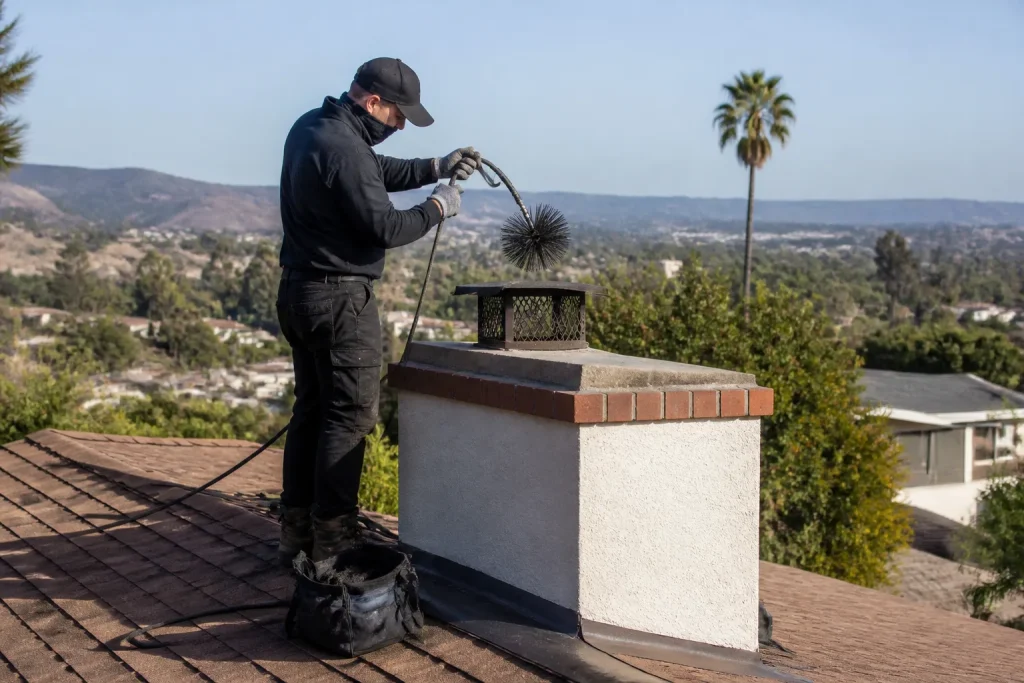
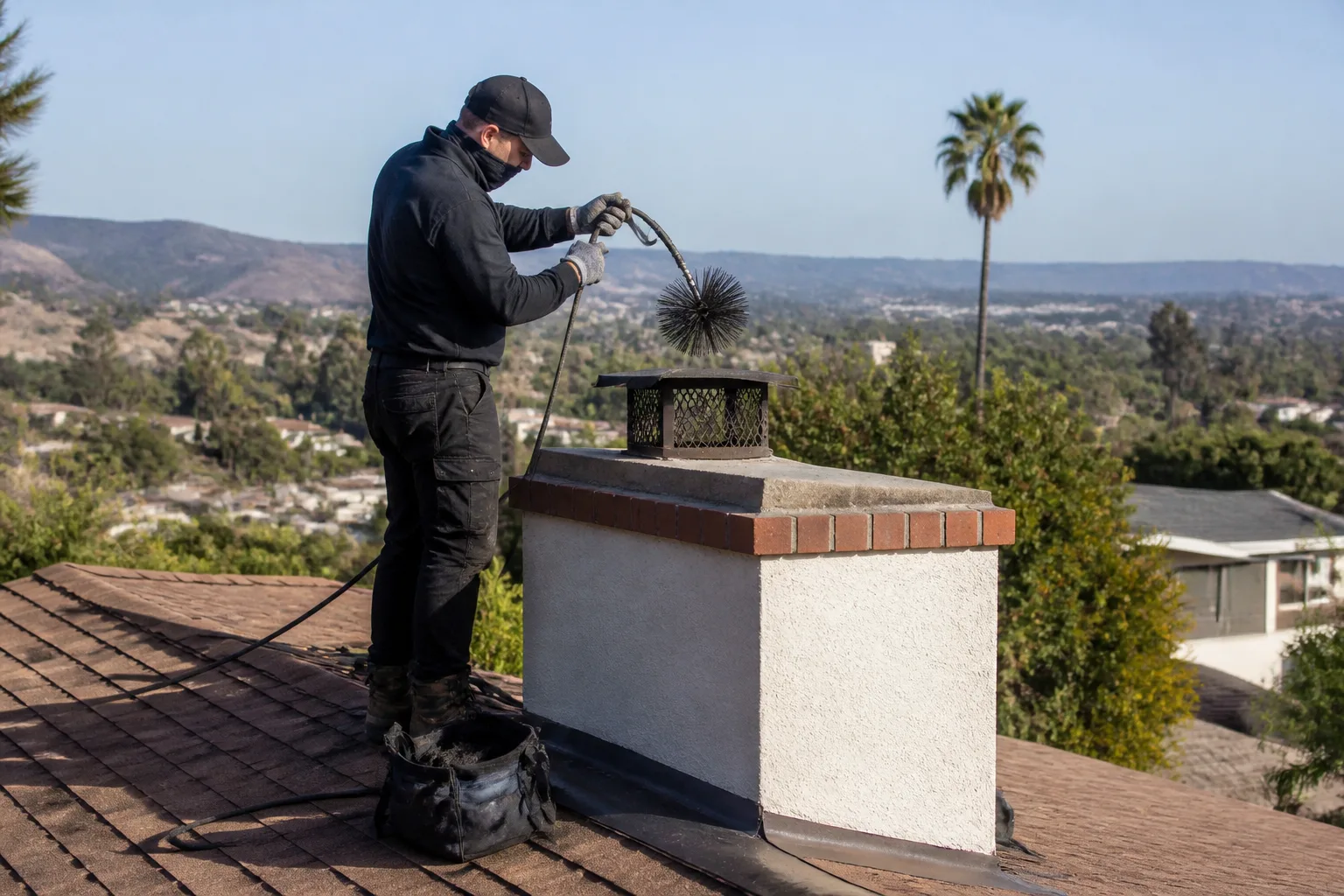
Traditional rod-and-brush cleaning uses interlocking rods with a brush head that the technician pushes and pulls through the flue by hand, from the top down or bottom up. The brush head is typically flat wire or poly, sized to the flue dimensions. This method works well on straight chimneys with standard dimensions and light-to-moderate buildup. It’s straightforward, effective, and has been the industry standard for decades. Rotary cleaning attaches a whip head, usually nylon or steel cable, to a drill that spins at high speed inside the flue. The spinning action aggressively breaks up glazed creosote, which is the hard, shiny, third-stage deposit that a hand brush often can’t dislodge. Rotary systems are especially effective on clay tile flues that have developed heavy accumulation or on chimneys with slight offsets where a rigid brush can struggle.
Most professional sweeps carry both systems and choose based on what they find. A technician who only has one option is working with a limited toolkit. A technician who can assess the flue and choose the right method is doing the job properly. In La Mesa, where many homes burn soft woods during the cool winter months, glazed creosote is common enough that rotary capability should be standard equipment for any company you hire.
What a Professional Sweep Looks Like, Step by Step
Here’s what you should expect when a properly equipped chimney sweep arrives at your La Mesa home. This sequence takes roughly one to two hours depending on flue condition and accessibility.
- 1
Setup and protection: Drop cloths go down around the fireplace opening. The technician covers nearby furniture and flooring where needed. A HEPA vacuum or dust-control system gets positioned.
- 2
Initial inspection: A flashlight and mirror check, or a basic camera look, identifies the flue dimensions, the level of buildup, and any obvious obstructions like bird nests or fallen debris. This step determines which cleaning method gets used.
- 3
Mechanical cleaning: The technician runs the brush or rotary whip through the full flue length, working from either the roof or the firebox depending on configuration. Multiple passes are normal. You should hear consistent, methodical movement, not rushed or erratic work.
- 4
Dust control and evacuation: The vacuum runs throughout to prevent soot from migrating into the living space. A properly sealed setup keeps your home clean.
- 5
Post-sweep inspection: A camera scan confirms the flue walls are clean and documents liner condition. This step is where many budget operators fall short. Without a camera scan, a technician cannot honestly tell you whether your flue is clean or your liner is intact.
- 6
Report and recommendation: You should receive a clear explanation of what was found, what was done, and whether any follow-up work is recommended. Professional companies like us include camera documentation, so you can see exactly what we saw.
If a technician in La Mesa skips the camera inspection or finishes in 20 minutes without explaining what they did, ask questions. A proper sweep is methodical, not fast, and the documentation should support whatever you’re told.
Why a Sweep Is Also the Right Time to Check Your Liner
Your flue liner is the barrier between combustion exhaust and the combustible materials in your home’s structure. Clay tile liners crack over time, especially in La Mesa homes built with older masonry techniques. When cracks develop, heat and carbon monoxide can reach brick and framing that were never designed to withstand direct exposure. That’s not an overstatement, it’s physics, and it’s the single most important reason to have your liner inspected during a routine cleaning.
Olympia Chimney Supply distributes liner systems that professional chimney companies use to address liner deterioration: stainless steel rigid and flexible liners, insulation components, and connection hardware. When a sweep reveals cracked tiles or gaps between sections, the next conversation is about restoration or replacement. For homes with complex offsets or tight masonry bends, flexible liner systems like DuraFlex are often the right call, since they can navigate curves that rigid pipe cannot. In our work, we also carry HeatShield, a resurfacing system that can restore damaged flue liners without pulling the chimney apart, which matters because full liner replacement isn’t always necessary if the damage is caught early enough.
The key point: a cleaning-only mindset misses half the job. The sweep gets creosote out, but the inspection is what tells you whether the chimney is safe to use at all. Every chimney cleaning we perform includes that inspection step, because skipping it can leave a homeowner with a clean flue and a dangerous chimney.
Three Questions to Ask Any Sweep Technician
Before you hire anyone in La Mesa, ask these three questions. The answers will tell you more than any marketing copy ever could.
- “What size is my flue, and what brush head are you using?” A professional technician should be able to measure or already know the flue dimensions and match the brush accordingly. Vague answers like “a standard size” or “whatever fits” signal guesswork. Professional equipment is sized to the flue, not the opposite.
- “Do you use a rotary system or traditional rods?” Either answer is acceptable on its own, but the technician should be able to explain why they chose that method for your specific flue. If they can’t articulate a reason, they’re probably just using whatever tool they’ve always used, whether or not it’s appropriate for your situation.
- “Will you do a camera inspection after the sweep?” If the answer is no, move on. A post-sweep camera scan is the only way to verify that the cleaning was complete and the flue is in sound condition. Companies that skip this step are asking you to take their word for it, and your family’s safety shouldn’t depend on anyone’s word alone.
We’ve answered these questions honestly for years, and we’re glad when homeowners ask them. It tells us you’re paying attention, and it separates the professionals from the pretenders quickly.
Related Services in La Mesa: Your Chimney and Your Dryer Vent
Chimney safety and dryer vent safety share the same underlying principle: exhaust needs a clear, unobstructed path out of your home. A clogged dryer vent doesn’t just waste energy, it creates conditions for a lint fire that can spread before you know it’s burning. We handle both because a household’s ventilation safety shouldn’t require two different companies and two different schedules. Gelco and Famco components give us access to professional vent products that hold up better than consumer-grade foil connectors that crush and sag. If you’re booking a chimney sweep in La Mesa, ask about dryer vent cleaning in the same visit, it’s a sensible way to cover both exhaust paths at once.
What happens when you call
- 1
A real person answersNo phone trees – you reach a local pro.
- 2
You get an upfront price rangeHonest numbers before anyone is dispatched.
- 3
A background-checked tech heads outLicensed & insured, dispatched right away.
- 4
You approve before work beginsNothing starts until you say go.
The Bottom Line
Olympia Chimney Supply equipment on a La Mesa job site signals that you’re dealing with a technician who buys professional-grade tools, not homeowner-grade substitutes. The brush head diameter, the rod flexibility, the rotary versus traditional decision, and the presence or absence of a post-sweep camera inspection are the things that separate a real cleaning from a surface-level pass. Ask questions before you hire. Expect clear answers. And if you’re in La Mesa and want this handled by a company that uses professional equipment and stands behind the work, Chimney Cleaning La Mesa offers free estimates. Call (833) 593-6651. We answer 24/7. Fast dispatch from 7am to 7pm, Sunday through Friday.
Frequently Asked Questions
How much does a chimney sweep cost in La Mesa? A typical chimney sweep in La Mesa runs between $180 and $340 depending on flue height, buildup level, and whether you add a dryer vent cleaning or camera inspection. The written estimate sets the final price, and estimates are free. Call (833) 593-6651 for an exact quote.
How often should I have my chimney swept? The general rule is once per year or after every cord of wood burned, whichever comes first. Homes in La Mesa that burn soft woods or use the fireplace regularly through the winter months often need more frequent attention because soft woods produce more creosote. A camera inspection during each sweep helps you track buildup patterns over time.
Do I really need a new liner if my sweep finds cracks? Not necessarily. Minor cracking can sometimes be addressed with restoration products like HeatShield, which resurface the interior of the flue rather than replacing it entirely. Significant damage or shifting sections typically require a new liner, often a flexible stainless system like DuraFlex. A camera inspection during your chimney sweep is the first step in determining which path applies to your situation.
What happens if I skip a chimney sweep for a few years? Creosote accumulates in layers, and third-stage glazed creosote is both harder to remove and more flammable than the early stages. The longer you wait, the higher the risk of a chimney fire, and the more involved the eventual cleaning becomes. In La Mesa, where many homeowners use fireplaces seasonally rather than year-round, it’s easy to lose track of the schedule, but the buildup doesn’t pause just because you stopped burning. Call (833) 593-6651 if it’s been more than a year since your last cleaning.
Written by the team at Chimney Cleaning La Mesa, serving La Mesa since 2013.
Need Chimney Cleaning Help?
Call Chimney Cleaning La Mesa - licensed & insured, here with fast help in La Mesa.
(833) 593-6651