
Last updated November 4, 2026
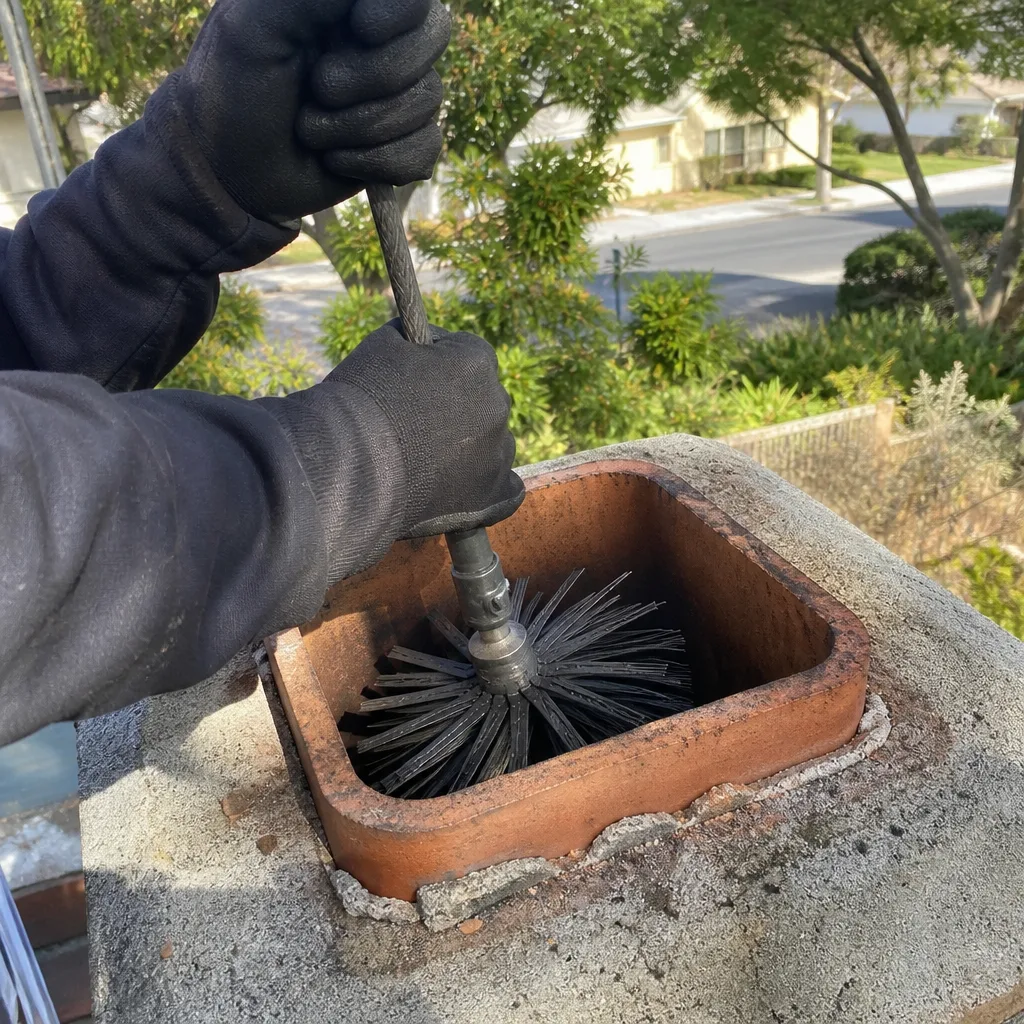
 Sweep & inspection
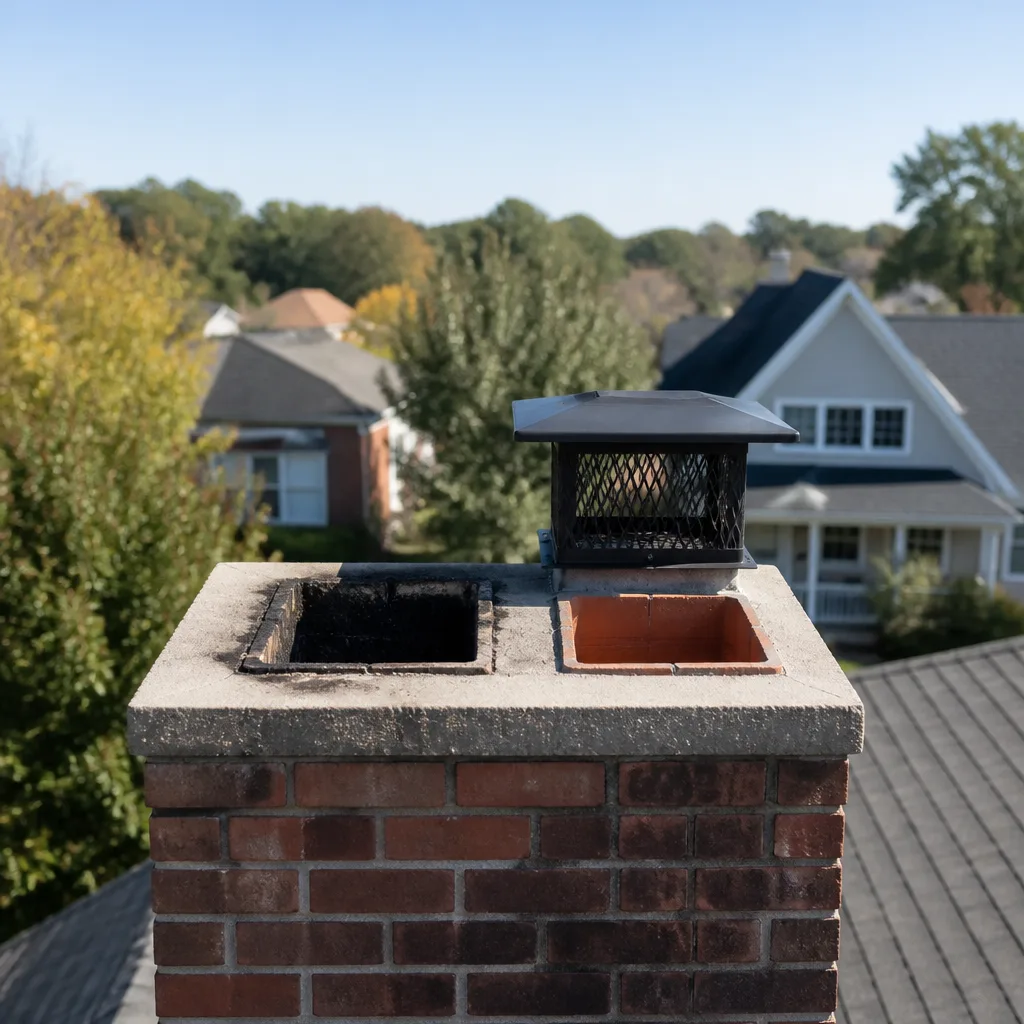
 Caps & crowns
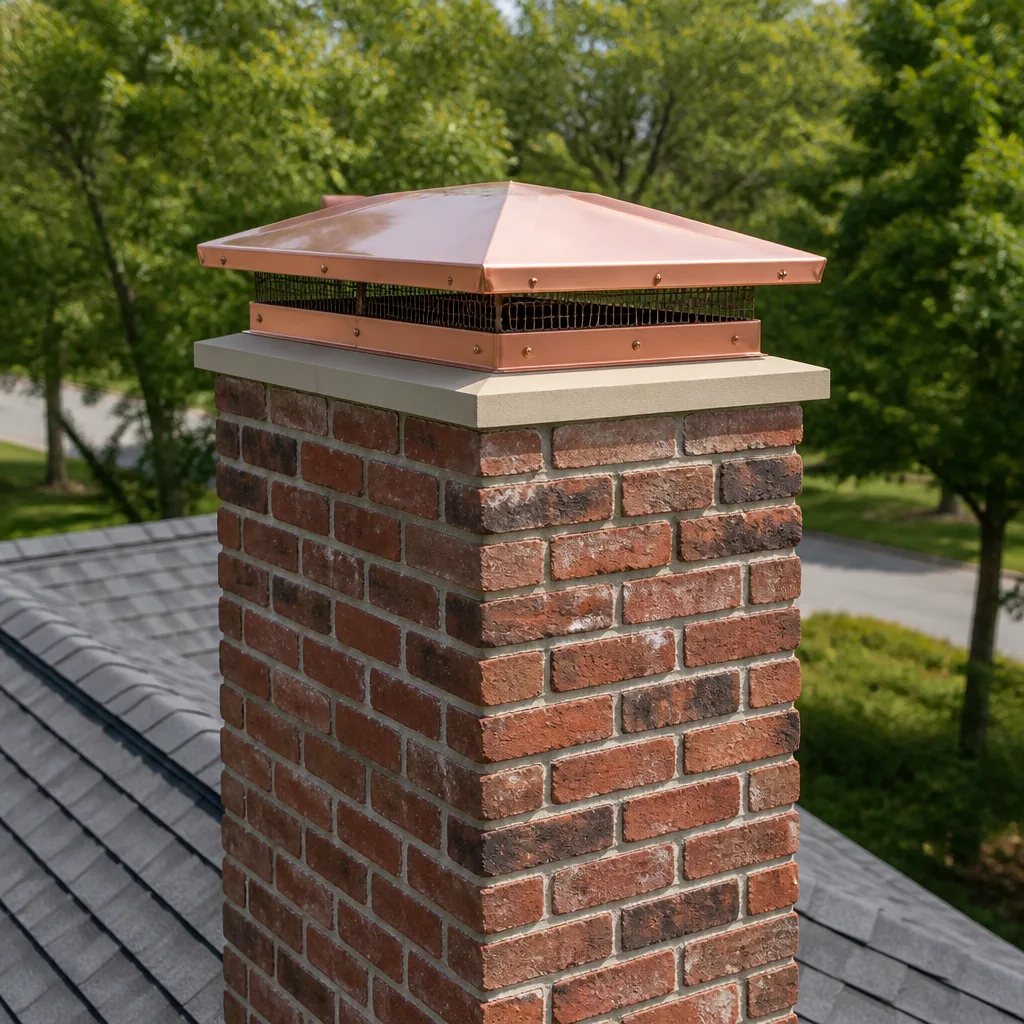
 Flue relining
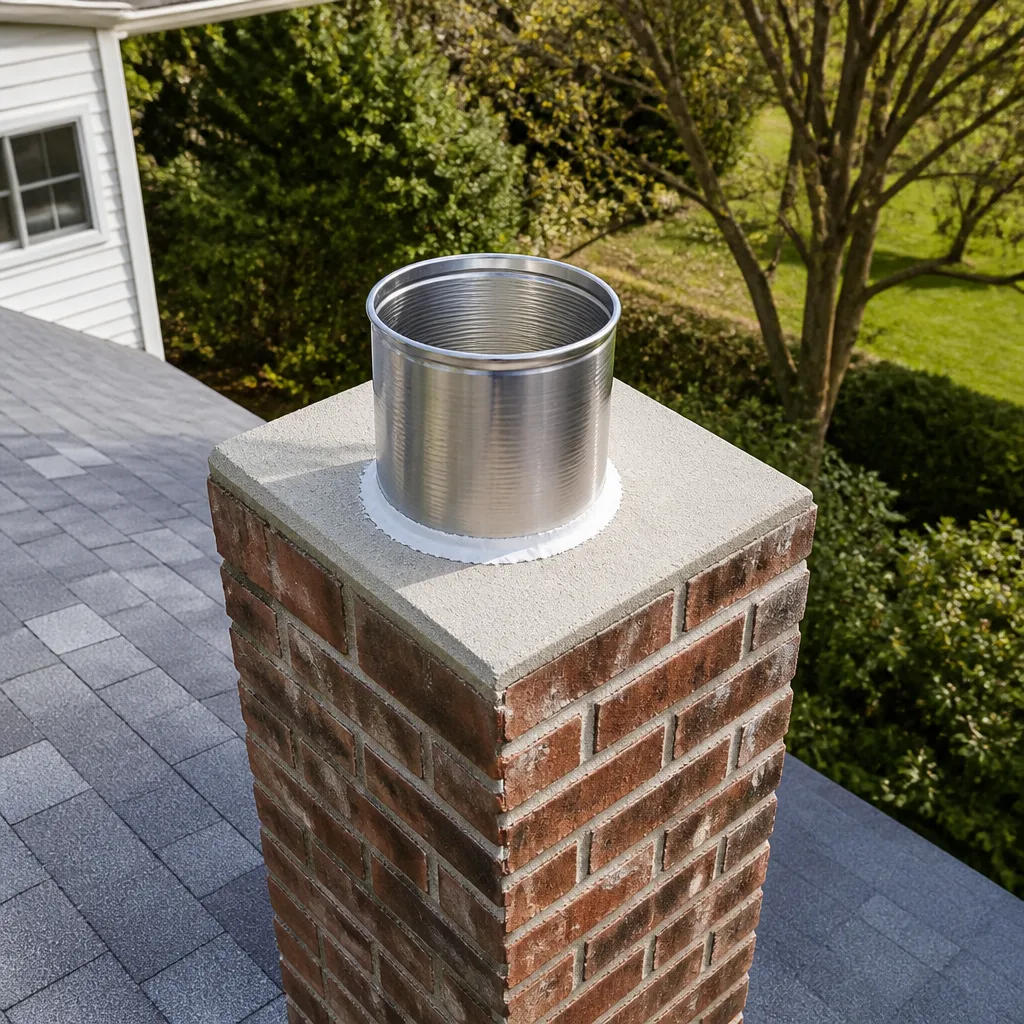
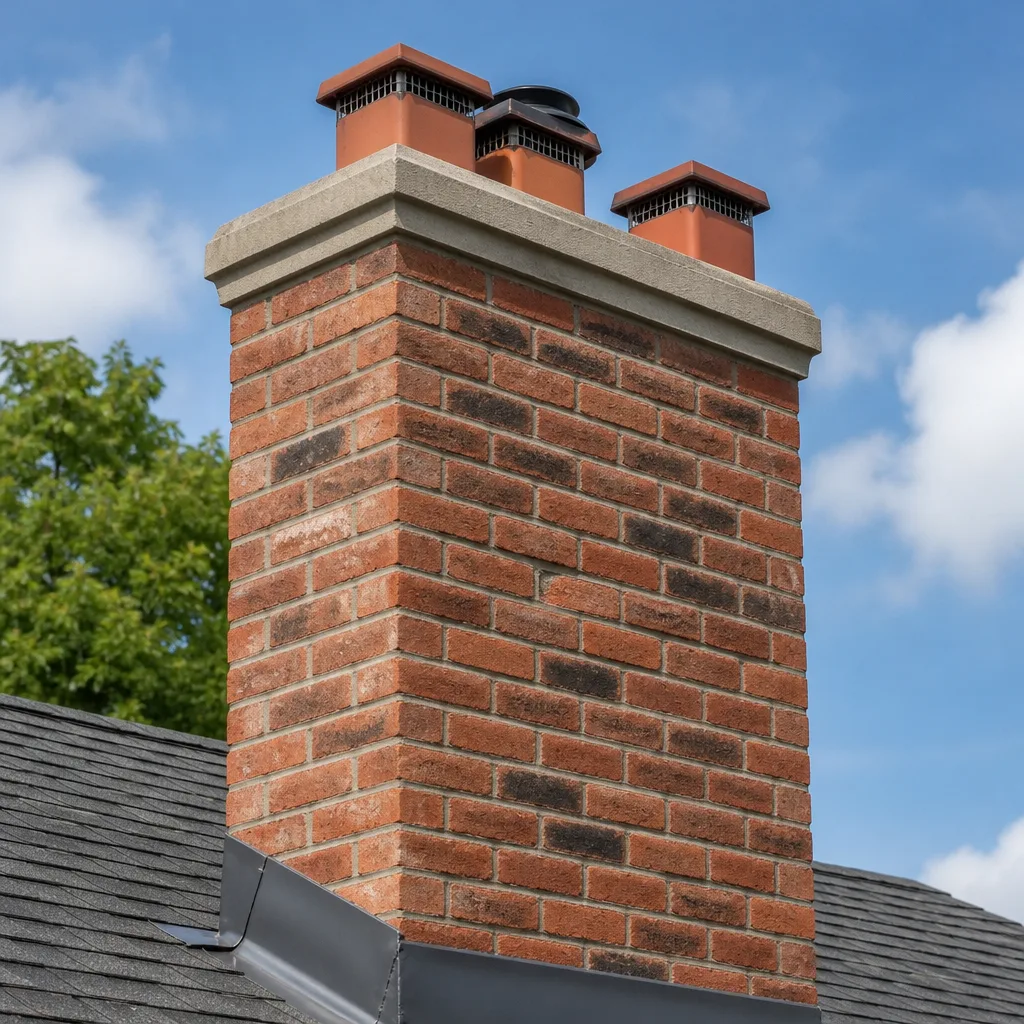 Masonry repair
 Gas fireplace service
Level 1 sweep and inspection to the NFPA 211 annual standard - flue, crown, cap, and flashing checked and photographed
Chimney sweep logs do not sweep chimneys. They loosen some creosote - which then falls where a brush and vacuum still have to collect it.
Chimney Cleaning Warning Signs: A La Mesa Homeowner’s Reference Guide
Most chimney guides wait until the problem is obvious: smoke pouring into the room, a chimney fire, or water dripping through the ceiling. By then, the repair bill has tripled. This guide works the other way. We’re going to cover the quiet, early signals your La Mesa chimney gives off months before a real hazard develops: a campfire smell on a windy day that most people chalk up to the neighbor’s fire pit, white staining on stucco that gets mistaken for hard-water residue, and a metallic ping from the flue that’s actually your damper telling you something. By the time you finish reading, you’ll know which signs you can check yourself with nothing but a candle, and which ones mean it’s time to pick up the phone.
Quick Answer
The early warning signs of a chimney problem in La Mesa include unusual smells (asphalt-like or campfire odors when no fire is burning), white or rust-colored staining on the chimney exterior, flakes of creosote or broken clay tile in the firebox, and a candle flame that flickers downward at the firebox opening. Any one of these is worth acting on. Seeing two or more together usually means your chimney is no longer venting properly or the flue liner has begun to fail, and a professional chimney sweep should inspect it before your next fire.
Styles & brands we work with
- Sweep & inspection
- Caps & crowns
- Flue relining
- Masonry repair
- Gas fireplace service
Table of Contents
- Draft Reversal vs. Downdraft: The Smell That Tells You Which One You Have
- Exterior Warning Signs on Stucco-Clad La Mesa Homes
- The Creosote Odor Timeline: What Stage 1 and Stage 2 Smell Like
- Sounds Your Liner and Damper Make Before They Fail
- The Candle Smoke Test: A 60-Second Draft Diagnosis
- What’s Falling Into Your Firebox Is Trying to Tell You
- Why Your Dryer Vent Belongs in the Same Conversation
Draft Reversal vs. Downdraft: The Smell That Tells You Which One You Have
Here’s the opening hook from earlier, expanded: a strong campfire smell in your living room on a windy November day in La Mesa isn’t your neighbor’s fire pit, and it isn’t nostalgia. It’s a draft reversal, and it means outside air is coming down your chimney and pushing whatever is inside the flue back into your house. La Mesa sits in a valley with wind patterns that shift in fall and winter, and homes on the lower slopes and canyons feel this more than those on flat lots. The chimney that drafted perfectly in August suddenly behaves differently when the wind direction is just right and the temperature difference between indoors and outdoors narrows.
There’s a real difference between a draft reversal and a downdraft, and it shows up in when you smell the smoke. A downdraft happens while you’re actually burning wood. The fire is lit, and wind gusts overpower the flue’s upward draw, forcing smoke back into the room for a few seconds at a time. You see it, you smell it, you open a window and it settles. A draft reversal is quieter. It happens when no fire is lit, usually overnight or while you’re at work. The chimney, still warm enough to create a slight upward current inside the house, starts pulling downward when the wind hits the cap at the wrong angle. It carries the smell of cold creosote and last week’s ashes into the living space. You notice it as “that fireplace smell” that never quite goes away.
What each one indicates matters for how a technician approaches the repair. A downdraft usually points to a cap issue, a flue that’s undersized for the firebox, or a chimney that doesn’t extend far enough above the roofline. A draft reversal more often suggests the flue liner is coated with enough creosote that even a reversed draft carries a strong odor, or that the damper isn’t sealing fully when closed, or that negative air pressure from exhaust fans in the home is winning the tug-of-war with your chimney. None of these resolve on their own, and none should be ignored.
Exterior Warning Signs on Stucco-Clad La Mesa Homes
La Mesa has a distinctly mid-century housing stock, and much of it is stucco. Stucco is a fine cladding material for our dry climate, but it hides chimney damage in ways brick doesn’t. Hairline cracks at the chimney base get painted over. White staining gets mistaken for irrigation overspray. Here’s what to actually look for when you walk out to the curb and look up.
Efflorescence staining (white chalky residue). Efflorescence looks like a white, powdery film on the stucco surface of your chimney. It happens when moisture inside the masonry moves toward the surface, carrying dissolved salts with it. The water evaporates, the salt stays, and the result is that chalky white look. In La Mesa, this appears most often on the shaded side of the chimney or beneath the chimney crown, where morning marine-layer moisture from the coast’s edge lingers longest. What efflorescence tells you is that water is moving through your chimney’s masonry, and it isn’t just condensation.
Stucco cracking at the chimney base. The house and the chimney settle at different rates. The chimney is a heavy masonry column sitting on its own footing; the house’s wood framing expands and contracts with temperature and humidity. In clay-rich La Mesa soils, which shrink and swell with the rain cycles, that differential movement is more pronounced. The stress concentrates at the point where the chimney passes through the roofline or meets the exterior wall. If you see a diagonal crack tracking across the stucco at the chimney’s base, that’s the first visual evidence. If the crack is wide enough to fit a dime, or if it’s widened over one season, the chimney’s structural movement has accelerated.
Flashing rust bleed. The sheet-metal flashing where your chimney meets the roof is the first component that fails during rain. On stucco homes in La Mesa, a failing flashing shows up not as a visible leak but as a rust-colored stain running down the stucco face: the metal’s corrosion bleeding into the porous surface. The stain itself doesn’t mean water is entering the living space yet. But if the flashing’s rusted enough to stain, the seal has likely broken down, and the next heavy winter storm is a risk. Standing at the curb and spotting that rust streak from the ground takes 30 seconds. Most homeowners have never looked.
The Creosote Odor Timeline: What Stage 1 and Stage 2 Smell Like
Creosote is the byproduct of wood smoke condensing on a flue liner’s surface. It isn’t one substance; it’s a family of compounds, and it progresses through stages that look, feel, and smell different. The industry talks about creosote stages mostly in terms of what a sweep sees when they run a camera. But you can learn a lot from your nose before we ever arrive.
Stage 1 creosote is a light film or fine powder. On a typical La Mesa winter evening fire with well-seasoned oak or eucalyptus, it deposits in a fine gray-brown layer on the flue tile. Its smell is faint and generic, often described as “old campfire” or “that smoky smell in a sweater the day after a bonfire.” You usually notice it only when the weather first warms in spring and the house heats up, because the increased temperature drives odor out of the fireplace opening. Stage 1 isn’t dangerous by itself. It’s what a standard sweep removes during regular maintenance.
Stage 2 creosote is a different animal. It forms when flue temperatures are lower (a smaller fire, or green wood, or a chimney that draft poorly) and the smoke condenses more aggressively. Stage 2 looks like glossy, black, tar-like flakes stuck to the liner. Its signature smell is like asphalt or hot roofing tar, and it becomes especially noticeable during La Mesa’s late-summer heat waves when the chimney cavity bakes in direct sun. The heat warms the creosote just enough to release volatile compounds into your house. If you walk into your living room in August and smell what seems like hot pavement, that’s not the driveway. That’s Stage 2 inside your flue. Stage 2 is also a fire hazard waiting for the right ignition source: a hot fire on a cold evening, a spark lifted up the flue, and the right oxygen mix. The gap between “weird summer smell” and “chimney fire” is smaller than you want to think about.
When we sweep a La Mesa chimney and the customer says they’ve been smelling asphalt for two summers, we know before we look that the flue needs more than a basic brushing. That smell doesn’t come off with a wire brush alone in some cases. It often calls for a closer look at the liner’s condition, which ties directly into the next section.
Sounds Your Liner and Damper Make Before They Fail
Most people don’t associate sound with chimney problems. But a normal chimney is nearly silent when it’s not in use, and the sounds it does make when it is in use follow predictable patterns. When you hear something different, pay attention.
Metallic pinging on the first fires of the season. La Mesa’s fall and winter nights drop into the 40s often enough that your chimney components go through a real thermal cycle, even in our mild California version of winter. When you light a fire, the stainless steel cap, the damper plate, and the liner all heat up rapidly and expand. That expansion sometimes creates a soft ping or tick, especially in the first 10 to 15 minutes of a fire. A single ping or two is normal thermal expansion. But a rhythmic, repeated pinging that sounds like someone tapping a spoon on a metal pan is different. It’s usually a damper plate that’s warped and catching on its frame as it heats, or a cap screen that’s loosened and vibrating in the draft. Left alone, a warped damper no longer seals when closed, which means the chimney continues to exhale cold, smoky air into your house when the fire’s out.
Popping and crackling that isn’t the wood. A fire crackles. That’s the wood. The chimney flue should not crackle. If you hear sharp, irregular popping sounds coming from the chimney column itself during a fire, it can be fragments of saturated creosote igniting in small pockets, or in more serious cases, the sound of flue tile joints cracking under thermal stress. The difference matters: firewood crackling is soft and localized to the firebox. Flue popping is sharper, higher up, and often metallic or ceramic in tone. If the popping sound is coming from above the damper, shut the fire down and have the flue checked. Clay flue tiles in older La Mesa homes, especially those built before modern liner standards, are more prone to this kind of stress cracking, which is exactly the condition that a product like HeatShield can often restore rather than requiring a full rebuild.
The Candle Smoke Test: A 60-Second Draft Diagnosis
There is one simple diagnostic tool that works in any La Mesa home, doesn’t cost a dime, and can tell you more about your chimney’s draft than a dozen blog posts. It’s a candle. Here’s how to run it properly.
- Prepare the firebox. Open the damper fully. Leave the glass doors open if your fireplace has them. Remove any ashes that are more than an inch deep, because they’ll absorb the draft and invalidate your test.
- Close the room. Shut the windows and doors in the room where the fireplace is located. The test checks the chimney’s natural draw, not the effect of a cross-breeze.
- Light a candle. Hold the candle about two inches inside the firebox opening, not deeper. Its flame should be visible and steady.
- Watch the flame’s direction. A healthy chimney with a clear path and an open damper creates an upward draft: the flame should bend slightly into the firebox. That means air is moving through the flue and out the top, and the chimney is inhaling from the room.
- Watch for the reverse. If the flame bends away from the firebox, blowing back into the room, that’s a draft reversal. The flue is not establishing a positive pressure path.
- Repeat at a different time of day. Draft changes with outdoor temperature and wind. Run the test in the morning and again in the early evening. If the flame reverses on a calm, clear evening, the problem isn’t the weather, it’s the flue or the cap configuration.
The candle test won’t tell you the cause, but it tells you the symptom with more precision than smell alone. It’s also a safe way to check a draft question without lighting a full fire, which is why we recommend it to La Mesa homeowners who call us about intermittent odor. Many times the customer has already run this test by the time we arrive, and we can move straight from the symptom to inspection with a camera and the right repair list.
What’s Falling Into Your Firebox Is Trying to Tell You
The firebox is the garage floor of the chimney: it’s where problems accumulate as debris. Sweep it out between uses, and the next morning’s debris tells you what’s happening higher up. Here’s what to look for.
Small, shiny black flakes. These are pieces of Stage 2 creosote, described earlier. They’re brittle when cool and break off the flue walls as the liner expands and contracts. Finding more than a tablespoon after one season of fires is a sign the flue needs more than a brushing.
Clay tile chips. Pieces of broken flue tile in the firebox are the most obvious symptom of a liner problem, and the easiest to spot. If you find reddish-brown clay fragments that don’t match your firewood or the firebrick, a section of flue tile has cracked and spalled. This happens in older masonry chimneys when the liner is heated unevenly over decades. The fragments can partially block the flue, which worsens draft by narrowing the passageway, which in turn deposits more creosote. Broken flue tile is also how fire reaches combustible framing through a masonry chimney, since the liner is the only barrier between the flue’s heat and the house structure. When we see broken tile in a Chimney Cleaning La Mesa inspection, the typical repair path is either a stainless liner like DuraFlex dropped into the existing flue, or a HeatShield resurfacing job if the damage is early enough.
White or gray ash that reappears with no fire. If you clean the firebox and find a fine white dust within a few days, that’s a draft reversal moving ash residue from the smoke shelf back into the chamber. It’s the visible cousin of the campfire smell. Together, the smell and the reappearing ash confirm the chimney is moving air the wrong way at least part of each day.
Why Your Dryer Vent Belongs in the Same Conversation
By now the theme should be clear: the venting systems in your home share a common failure language, and the chimney is only half the story. Your clothes dryer vent runs on the same principle, just with lower temperatures and worse maintenance habits. The lint-clogged dryer vent is the single most common ventilation hazard in La Mesa homes we walk into, and it’s almost never on the owner’s radar because the dryer still seems to work.
The connection matters for two reasons. First, a clogged dryer vent, like a blocked flue, creates backpressure. The hot, wet exhaust can’t leave the duct, so it backs up into the dryer or the wall cavity. Lint is highly combustible, and the internal ductwork in a typical La Mesa laundry room is inaccessible behind drywall, which means the first time most people see their ductwork is when a problem is already expensive. Second, the same symptom language applies: the dryer takes longer to dry, the laundry room feels humid after a cycle, or there’s a faint burnt-lint smell that comes and goes. None of those is normal, and none should be written off as “just an old dryer.”
The practical step is simple. If you’re inspecting your chimney for the signs in this guide, take five minutes and check your dryer vent exterior too. Look at the vent flap on the outside wall. If it doesn’t open when the dryer runs, or if you see lint accumulating around the flap, the duct is already restricting flow. We handle dryer vent cleaning alongside chimney work for exactly this reason: the same house, the same ventilation physics, one trip up on the roof and one trip through the laundry room. When a chimney inspection reveals combustion byproducts that aren’t leaving the home, the dryer vent is often the second system that’s been quietly failing for years.
Common Mistakes to Avoid
- Explaining away the campfire smell. The most common response to draft reversal is “the neighbor must be using a fire pit.” A campfire smell indoors on a non-wood-burning-season evening with no smoke visible outdoors is the chimney exhaling, not the neighborhood. Check it before you dismiss it.
- Waiting until you see smoke to book a sweep. Smoke backup is the final stage of a long failure chain. The earlier signals (smell, debris, staining) all show up before visible smoke. Acting at the early stage costs less and never interrupts your winter’s first fire.
- Painting over stucco cracks without inspecting the chimney. A hairline crack at the chimney base is a structural symptom. Covering it with latex or elastomeric paint hides the evidence for one season and guarantees the same crack or a bigger one next year. The crack should be inspected first.
- Assuming a mild La Mesa climate means less creosote. Creosote formation depends more on burn temperature and wood type than on outside weather. Low, smoldering fires in a climate that tempts you to build a quick one for ambience produce wetter smoke and more creosote, not less.
- Running the chimney sweep and the dryer vent check separately. Many La Mesa homeowners schedule a chimney sweep in fall and a dryer vent check never. Or they hire one company for the chimney and another for the dryer. The systems live in the same house and fail in similar ways, and a single visit from someone who understands both is more efficient.
- Replacing the damper before checking the liner. A noisy or sticky damper often gets the blame for odor, and someone replaces the damper only to find the smell persists. The draft or liner was the cause all along. The right inspection starts with the whole path, not the first component someone happens to see.
- Using green or unseasoned wood because it was cheap. Freshly cut wood in La Mesa’s dry air dries slowly, and burning it wet is the fastest way to build Stage 2 creosote. The cost savings from green wood disappear at the first sweep or liner repair.
See the difference
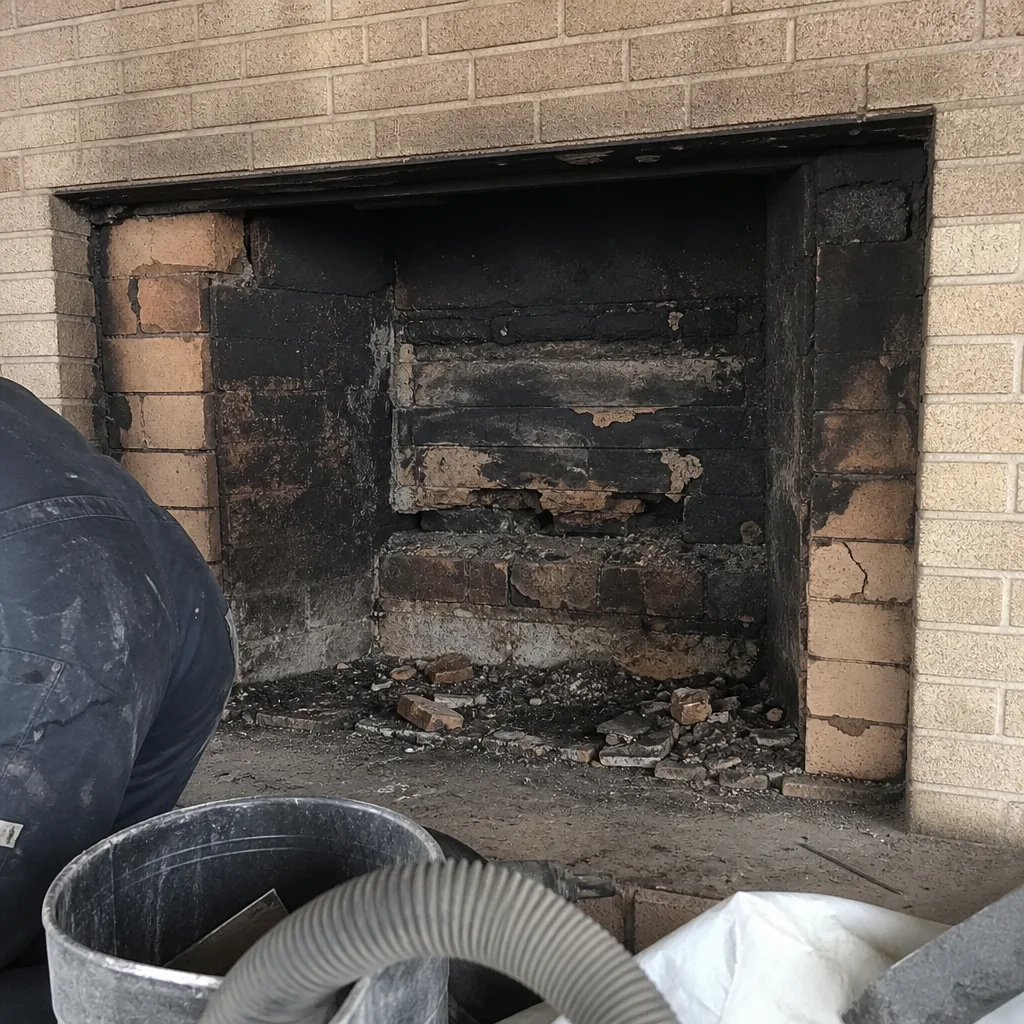 Before
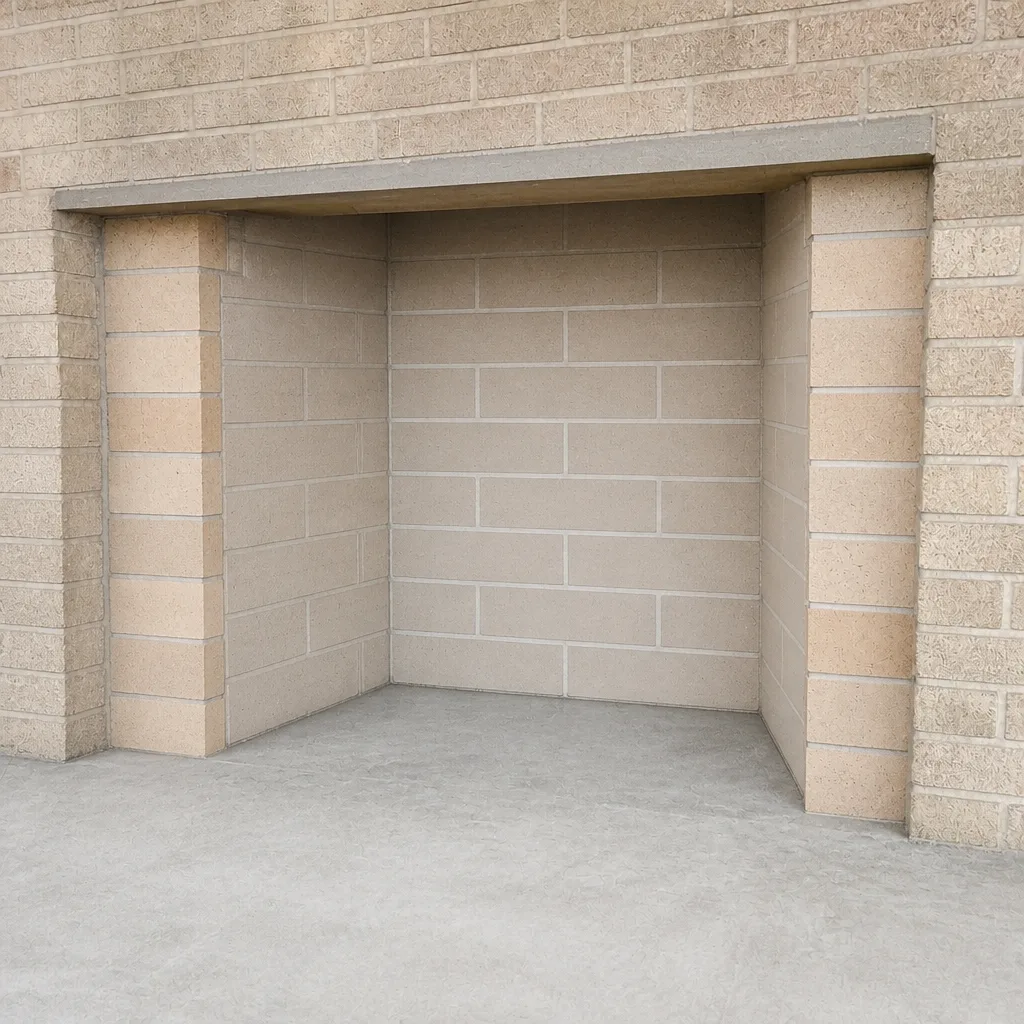 After
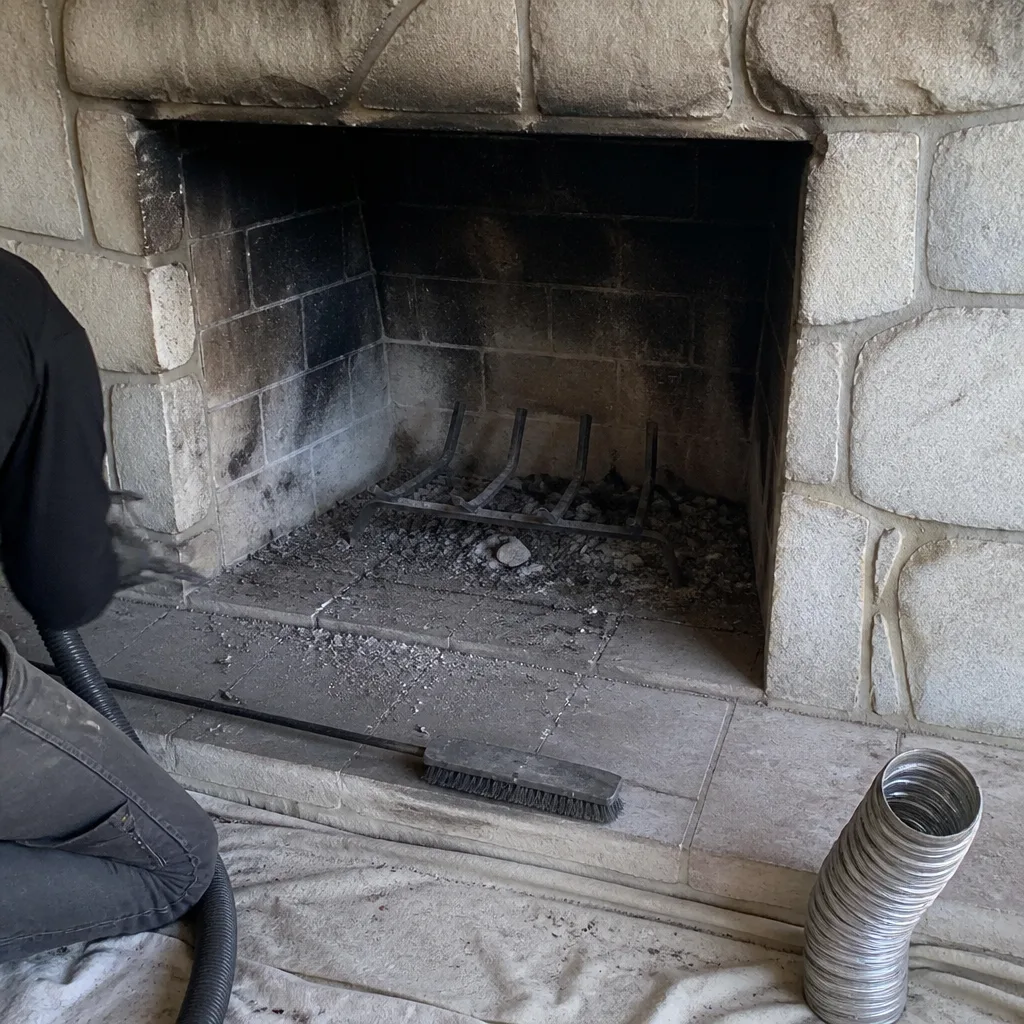 Before
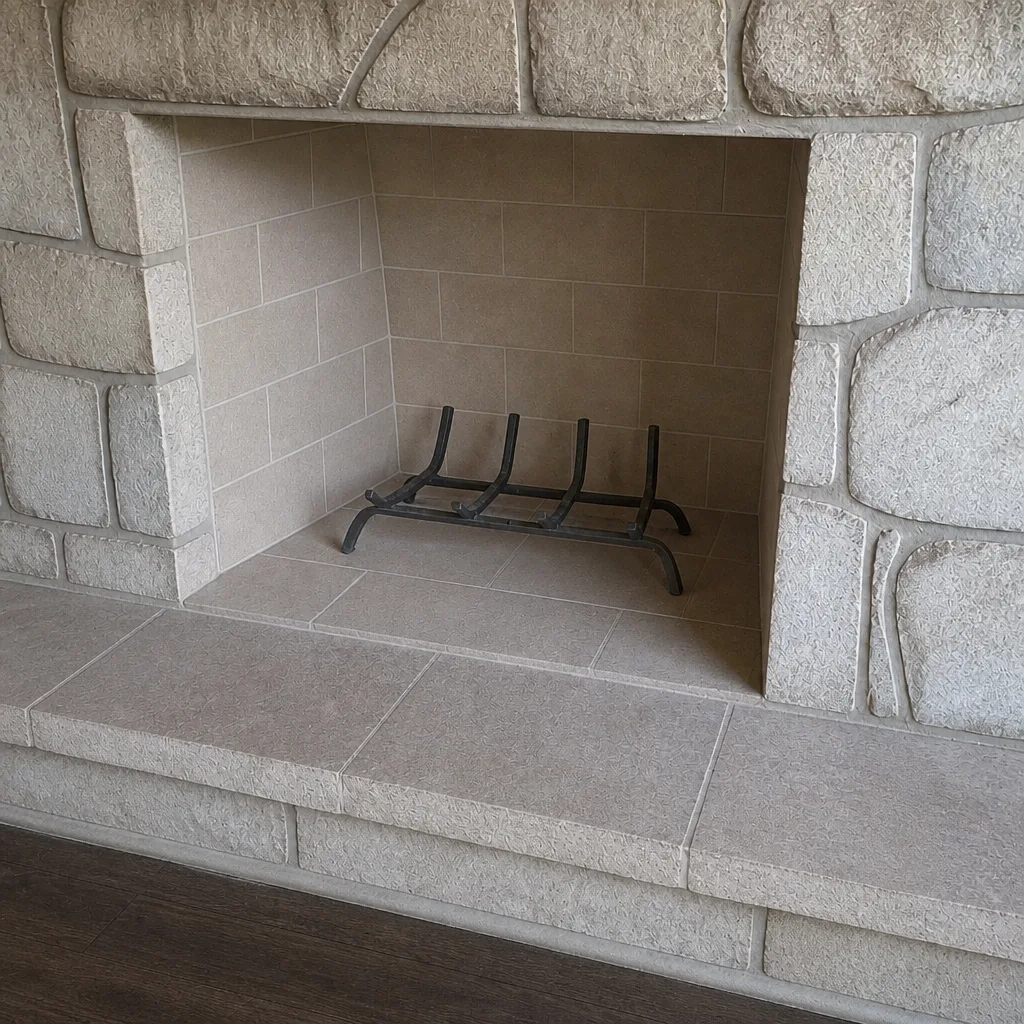 After
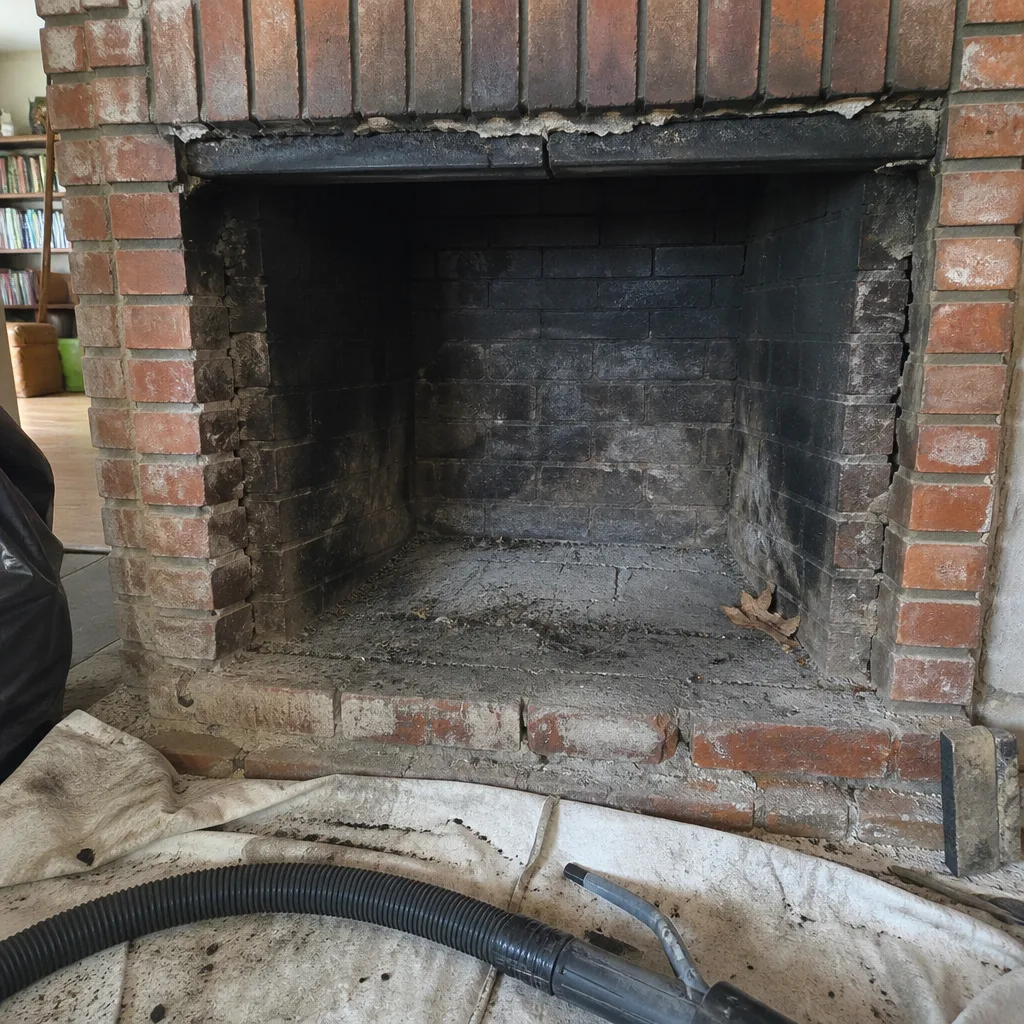 Before
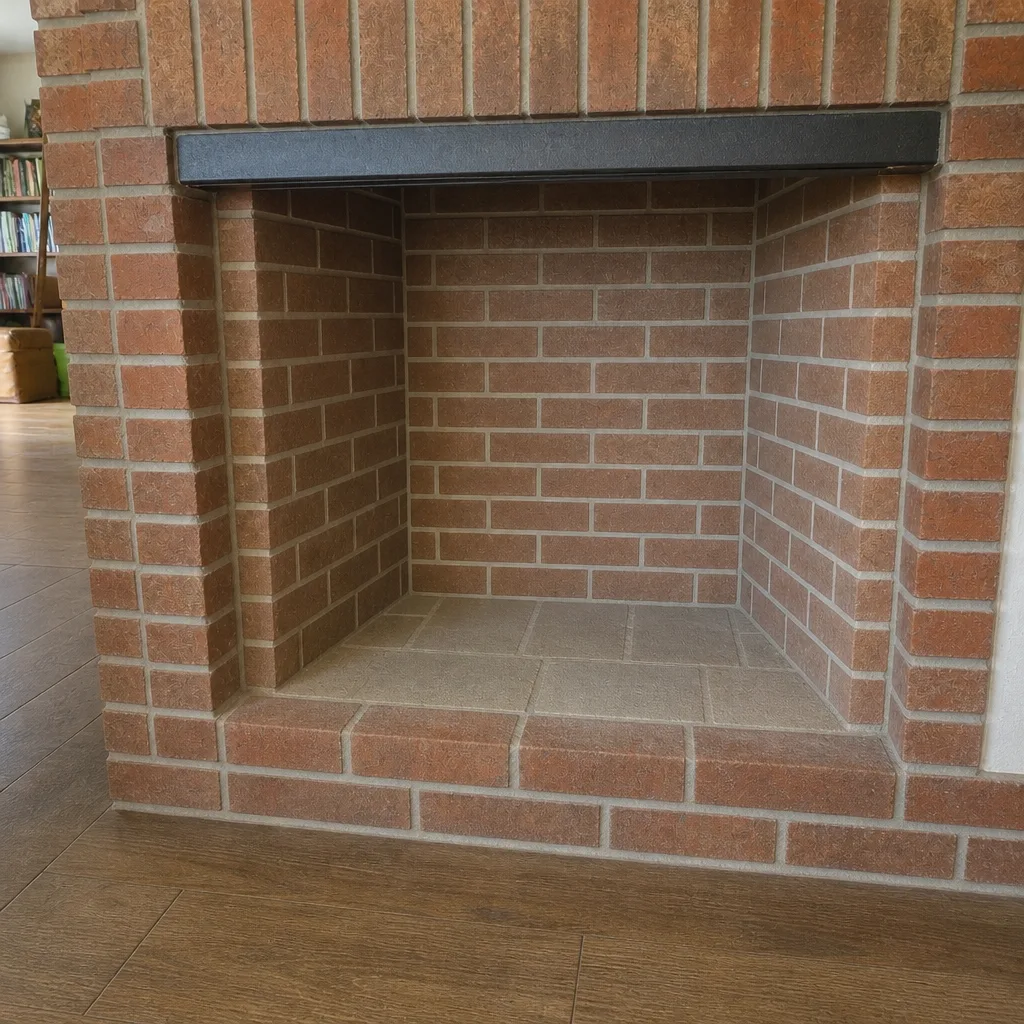 After
When to Call a Professional
A few cases justify dropping the candle test and calling us directly. If you’ve found clay tile chips or more than a handful of shiny black flakes in the firebox, the liner needs a camera inspection before your next fire. If the campfire or asphalt smell persists after a cleaning and the weather hasn’t changed, the draft reversal is structural, not seasonal. If you see stucco cracking that’s widened over one season, or rust staining on the stucco face, the flashing or crown has failed, and water is working its way in. Any one of these warrants a professional look. In our experience serving La Mesa since 2013, the homes that stay safe are the ones where an early sign gets checked within the week, not after the winter’s fire season. Call (833) 593-6651 for a free estimate. We answer 24/7. Fast dispatch from 7am to 7pm, Sunday through Friday.
Frequently Asked Questions
A healthy chimney with a clean flue and a functioning damper should smell like nothing at all. There may be a very slight cool, clean-air smell if the damper is open, but no smoke, no tar, and no campfire odor. If you can smell the fireplace while sitting across the room, the chimney is not venting or the damper isn’t sealing.
If you burn regularly during La Mesa’s fall and winter, an annual sweep before the first fire is the right schedule. Burning just occasionally still deposits creosote, though the buildup is slower. The rule of thumb the industry uses is a sweep at about 1/8 inch of creosote buildup, but most La Mesa homeowners prefer the simple annual routine. If you buy a home with an unknown chimney history, have it swept and camera-inspected before lighting your first fire.
A standard sweep for a typical La Mesa single-story stucco home usually lands in the low hundreds, but the exact price depends on flue height, creosote stage, and whether a liner inspection or crown repair is needed. Every job gets a written estimate before we start, and that’s what you approve. Call (833) 593-6651 for an exact quote, estimates are free.
Sometimes. Clay tile chips in the firebox or a metallic popping sound during a fire both point to liner damage. But some cracked liners are silent and invisible from below. That’s why we use a camera on every inspection. The liner is the only thing between the flue’s heat and your home’s structure, so a question this important is worth answering with a look, not a guess.
Not a different kind of inspection, but yes, different visual clues apply. Stucco conceals brick and hides cracks that would be obvious on an exposed brick chimney. The inspection looks for efflorescence, base cracking, and rust bleeding from flashing, which are the stucco-specific early warnings described above.
Yes, and in some La Mesa homes we’ve seen the dryer vent be the more urgent issue of the two. A lint-clogged vent burns at a lower temperature than a creosote fire, but the duct runs inside the wall, where a fire can smolder undetected and where water from backed-up exhaust can rot framing. The two systems share the same physics, and neither should be ignored.
The Bottom Line
The warning signs that matter in a La Mesa chimney are the early ones: a campfire smell on a windy day, an asphalt odor on a hot one, white salt staining on stucco, flaked creosote in the firebox, and a candle flame that bends the wrong way. None of these calls for panic. All of them call for a look from someone who can tell the difference between a damper issue and a liner issue and who has the tools and the materials to fix either. We’ve used DuraFlex liners, HeatShield resurfacing, and components sourced from Olympia Chimney, Gelco, and Famco to restore chimneys across La Mesa, and we’d rather inspect an early sign than rebuild a late-stage failure. Check the sign. Take the action. Get the winter back.
Call (833) 593-6651 for a free estimate. We answer 24/7. Fast dispatch from 7am to 7pm, Sunday through Friday.
Written by the team at Chimney Cleaning La Mesa, serving La Mesa since 2013.